
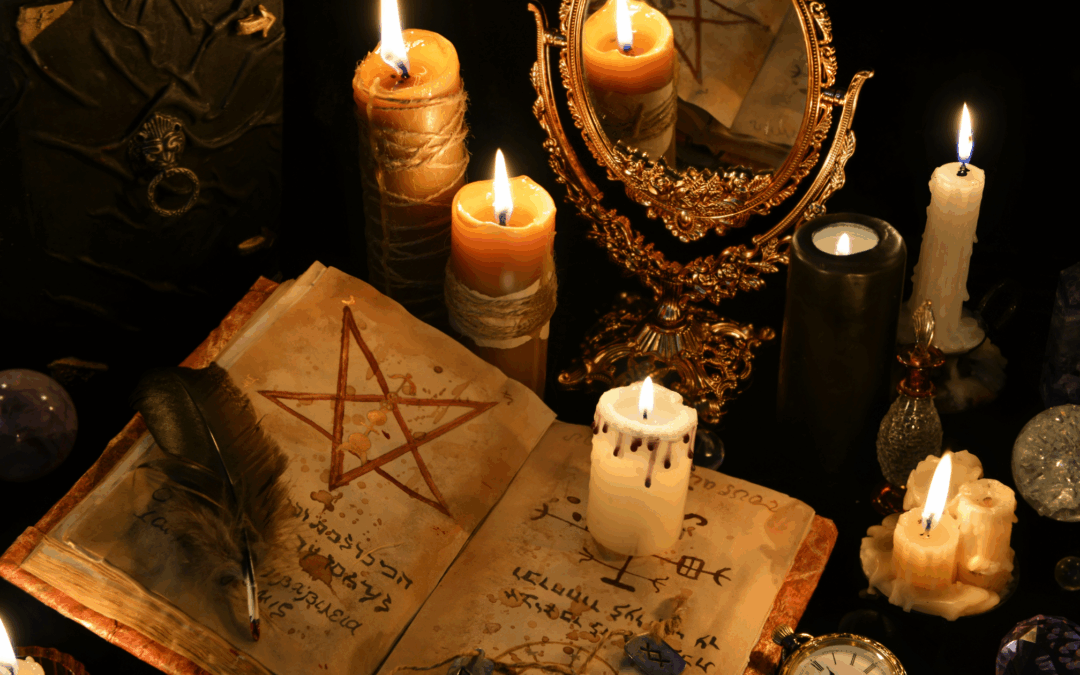
If you’ve found yourself asking what is witchcraft, you are not alone. Witchcraft has experienced a resurgence in recent years—not as something dark or theatrical, but as a personal, practical, and reflective spiritual practice. For many modern practitioners, witchcraft is less about spells and aesthetics, and more about intentional living, self-knowledge, and working in relationship with the natural and unseen world.
This guide is written for beginners who want a clear, grounded understanding of what witchcraft actually is—free from sensationalism, fear, or rigid rules.
Table of Contents
What Is Witchcraft?
At its core, witchcraft is a practice of intentional interaction with energy, symbolism, nature, and personal will to create change—internally, externally, or both.
Witchcraft is not a single religion, belief system, or cultural identity. Instead, it is a practice, meaning it can exist alongside many belief structures or none at all. Some witches are religious, some are spiritual, and others are entirely secular.
In practical terms, witchcraft often involves:
- Setting clear intentions
- Working with symbols, tools, or rituals
- Observing natural cycles (moon phases, seasons, energy shifts)
- Developing intuition and self-awareness
Modern witchcraft is less about control and more about alignment—aligning your actions, mindset, and environment with what you are trying to cultivate or release.
What Witchcraft Is Not
A major barrier for beginners is misinformation. Witchcraft is often misunderstood, so it’s important to clarify what it is not.
Witchcraft is not:
- Devil worship or inherently religious
- About causing unwarranted harm or manipulation
- A fixed set of rules you must follow
- Something that requires special lineage or innate powers
While historical persecution has shaped public perception, modern witchcraft is largely about personal responsibility, ethics, and conscious choice.
A Brief History of Witchcraft (Simplified)
Historically, witchcraft was not a single unified tradition. Practices we now call “witchcraft” existed across cultures as folk magic, herbalism, divination, and spiritual mediation.
Before industrialisation and organised religion, communities relied on local healers, wise women, and ritual specialists. Over time, these roles became stigmatised—particularly in Europe—leading to centuries of fear and suppression.
Modern witchcraft draws inspiration from:
- Folk traditions
- Pre-Christian spiritual practices
- Nature-based worldviews
- Personal experimentation and lived experience
Rather than attempting to perfectly reconstruct the past, most contemporary witches focus on adaptation, relevance, and respect.
What Do Modern Witches Actually Practice?
If you are wondering what witchcraft looks like in everyday life, the answer is: it varies widely.
Common elements of modern witchcraft include:
Intention and Ritual
Rituals provide structure and focus. These can be as simple as lighting a candle with a clear intention or as elaborate as a full seasonal rite.
Symbolism and Tools
Tools such as candles, herbs, crystals, tarot cards, or written affirmations are used not because they are magical on their own, but because they anchor meaning and focus the mind.
Nature Awareness
Many witches work with moon phases, seasons, or elemental symbolism. This fosters mindfulness and a sense of connection to larger cycles.
Inner Work
Shadow work, journaling, meditation, and self-reflection are central to many practices. Witchcraft often acts as a framework for personal growth and emotional processing.
Do You Need to Be “Born a Witch”?
No. Witchcraft is learned, practiced, and developed over time.
There is no requirement to have a family history, special gift, or external validation. Curiosity, discipline, and sincerity matter far more than labels.
Many people are drawn to witchcraft during periods of transition—burnout, grief, identity shifts, or a desire for deeper meaning. Witchcraft offers a way to slow down, pay attention, and engage intentionally with life.
Ethics and Responsibility in Witchcraft
A core principle in modern practice is personal accountability.
Because witchcraft emphasises intention and influence, many practitioners adopt ethical guidelines such as:
- Acting with consent
- Avoiding manipulation or harm
- Understanding that actions have consequences
Rather than rigid moral rules, ethics in witchcraft are usually reflective and situational, encouraging practitioners to consider impact, motivation, and responsibility.
How to Begin Practicing Witchcraft as a Beginner
If you are new and wondering where to start, simplicity is key.
A beginner-friendly approach includes:
- Learning foundational concepts rather than copying spells
- Keeping a journal to track thoughts, intentions, and experiences
- Observing natural rhythms (moon phases, seasons)
- Practicing mindfulness and grounding techniques
You do not need to buy tools immediately. Many witches begin with nothing more than attention, intention, and consistency.
Why Witchcraft Resonates Today
In a fast-paced, productivity-driven world, witchcraft offers:
- A sense of agency
- Space for reflection
- Connection to intuition and nature
- Meaningful ritual in everyday life
- Feminist values
For modern beginners, witchcraft is often less about belief and more about practice—a way to engage with life deliberately rather than passively.
Final Thoughts: What Witchcraft Can Be for You
So, what is witchcraft really?
It is a personal, evolving practice that invites you to observe, choose, and participate consciously in your own life. It does not demand perfection, belief, or performance—only presence.
If you are drawn to witchcraft, that curiosity itself is enough to begin.
In future posts, we will explore:
- Different types of witchcraft
- Common tools and how to use them
- Creating your own rituals
- Ethical spellwork and intention setting
Witchcraft is not about becoming someone else. It is about remembering how to engage with the world on your own terms. Read more content about beginner witchcraft.
🔹 Connect With Me Elsewhere
If you’d like to explore these ideas visually or in smaller, ongoing reflections, you can also find me here:
- Pinterest – for saved rituals, symbols, seasonal inspiration, and practice prompts
- Instagram – for grounded reflections, practice insights, and modern witchcraft notes
These spaces are an extension of the work here—practical, reflective, and intentionally modern.
🔹 Join the Coven
If you’re drawn to a deeper, more intentional approach to witchcraft, you’re not alone.
I share ongoing guidance on building a personal practice, working with natural cycles, and developing spiritual awareness without rigid rules or dogma. If you’d like to receive future reflections, practical insights, and resources as they’re released, you’re welcome to join.